
Kospi tumbles as Asian markets ask if Samsung’s AI boom is priced in
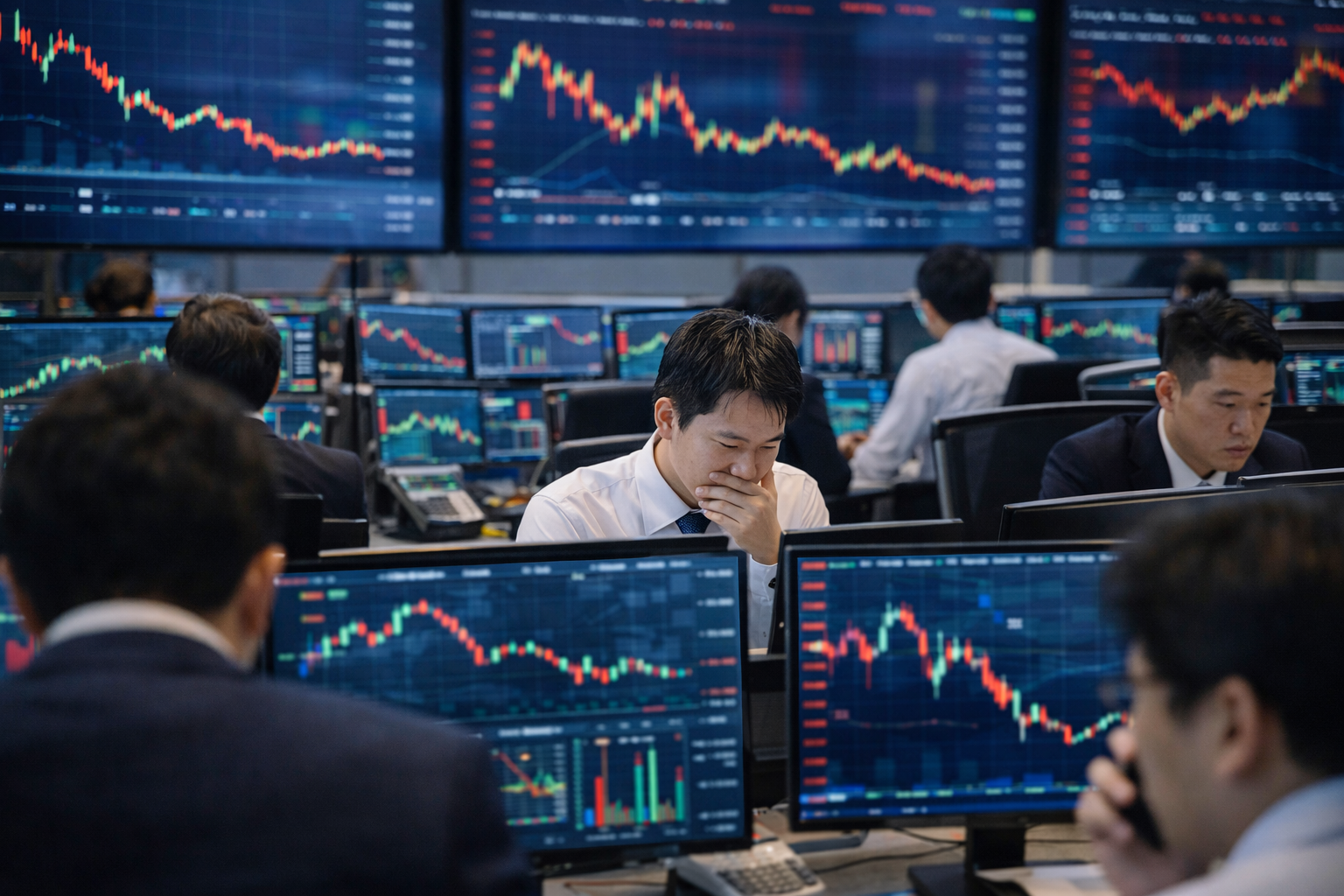
Asia’s chip rally finally met a stronger earnings number it could not celebrate.
Samsung Electronics delivered a forecast that would normally electrify the market, pointing to another record quarter as AI demand keeps memory supply tight.
Yet regional equities fell on Tuesday, a sign that investors are no longer rewarding the sector simply for beating expectations.
After months of spectacular gains, the question is shifting from whether AI is real to whether too much optimism is already priced in.
Samsung beat meets profit-taking
Samsung estimated second-quarter operating profit at 89.4 trillion won, or about $58.44 billion, a 19-fold increase from a year earlier and its third straight quarter of record operating profit.
The result underlined the strength of AI-linked demand for memory chips, particularly in data-centre and server applications.
Still, the broader market reaction was cautious.
South Korea’s Kospi dropped 4.1%, while MSCI’s broadest index of Asia-Pacific shares outside Japan slipped 0.73%. Japan’s Nikkei fell 1.08%.
Daiwa Securities economists see the AI rally as partly defensive, with investors crowding into chip names because the wider economic and inflation outlook remains uncertain.
That makes the market vulnerable to profit-taking when expectations become stretched.
AI trade remains alive
The selloff did not mean investors had abandoned the technology theme.
Wall Street rose overnight, with the Dow up 0.29%, the S&P 500 gaining 0.72% and the Nasdaq Composite climbing 1.12%, helped by hopes that AI will drive a strong second-quarter earnings season.
There were also fresh signs of investor appetite for AI-linked exposure.
SK Hynix launched a US share sale to raise 43 trillion won, or about $28.07 billion, and drew early indications of interest from major investors.
Broadcom also expanded its partnership with Apple to supply custom chips through 2031, easing concerns that Apple would quickly shift more of that work in-house.
That leaves the AI trade in a more mature phase.
The theme still has strong earnings support, but investors are starting to demand cleaner proof that valuations can keep rising.
Yen and oil keep macro risks alive
In currency markets, the yen stayed under pressure near 162 per dollar, keeping traders alert to possible Japanese intervention.
The currency also weakened to around 217 against sterling, close to its weakest level since 2007.
A 30-year Japanese government bond auction is another test.
A weak sale could push yields higher and add stress to the yen, though intervention risk may limit speculative selling.
Oil edged higher, with US crude up 0.54% at $68.92 and Brent rising 0.49% to $72.34. Gains were capped by supply concerns and softer demand expectations.
Investors are also watching President Donald Trump’s renewed warning on Iran and Wednesday’s FOMC minutes, the first under Fed Chair Kevin Warsh.
The post Kospi tumbles as Asian markets ask if Samsung’s AI boom is priced in appeared first on Invezz