

AMD to invest over $10 billion in Taiwan AI ecosystem
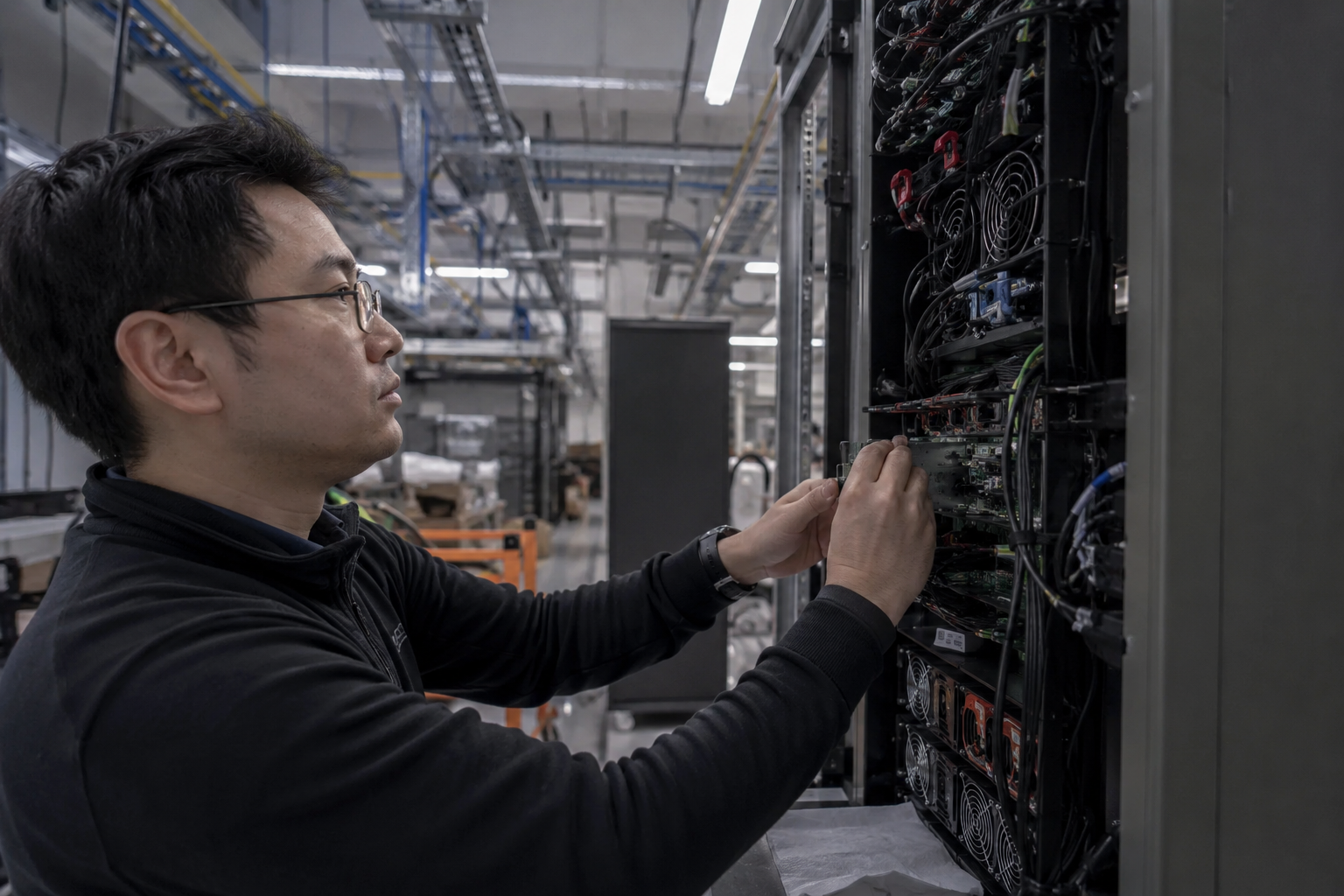
Advanced Micro Devices said on Thursday it would invest more than $10 billion across Taiwan’s artificial intelligence ecosystem as the US chipmaker looks to expand manufacturing capabilities and strengthen strategic partnerships for next-generation AI infrastructure.
The company said it will collaborate with Taiwanese firms ASE Technology Holding and Siliconware Precision Industries to develop more power-efficient technologies for AI systems and processors.
In a statement, AMD said the investment is aimed at scaling advanced packaging manufacturing and expanding partnerships across Taiwan’s semiconductor ecosystem to meet rising demand for AI infrastructure.
AMD focuses on AI infrastructure expansion
AMD said it is working with strategic partners in Taiwan and globally to advance silicon, packaging and manufacturing technologies designed to improve performance, efficiency, and deployment speed for AI systems.
The company said the efforts build on its existing ecosystem partnerships and leadership in chiplet architectures, high-bandwidth memory integration, 3D hybrid bonding, and rack-scale system design.
“As AI adoption accelerates, our global customers are rapidly scaling AI infrastructure to meet growing compute demand,” said Lisa Su, Chair and CEO of AMD.
“By combining AMD leadership in high-performance computing with the Taiwan ecosystem and our strategic global partners, we are enabling integrated, rack-scale AI infrastructure that helps customers accelerate deployment of next-generation AI systems,” Su added.
New packaging technologies under development
AMD said it is collaborating with ASE, SPIL, and other industry partners to develop and qualify next-generation wafer-based 2.5D bridge interconnect technology known as Elevated Fanout Bridge (EFB).
According to the company, the EFB architecture increases interconnect bandwidth and improves power efficiency for “Venice” CPUs.
AMD said the improvements are expected to support faster and more efficient systems capable of delivering greater performance-per-watt while operating within power and cooling constraints.
AMD also announced a milestone partnership with PTI involving the qualification of what it described as the industry’s first 2.5D panel-based EFB interconnect.
The company said the technology supports high-bandwidth interconnect at scale and would allow customers to deploy more efficient AI systems while improving overall economics.
AMD said these developments reinforce its strategy of combining silicon innovation with ecosystem partnerships to accelerate the deployment of next-generation AI infrastructure.
Helios platform deployment planned for 2026
AMD said the technologies and partnerships are being applied to support the deployment of the AMD Helios rack-scale platform in the second half of 2026.
The company said original design manufacturing partners, including Sanmina, Wiwynn, Wistron, and Inventec, are helping build Helios-based systems.
The systems will be powered by AMD Instinct MI450X GPUs, sixth-generation AMD EPYC CPUs, networking solutions, and the AMD ROCm software stack.
AMD said the Helios platform is designed to deliver improved AI performance through advances in compute capabilities, memory capacity, interconnect bandwidth, and system-level integration.
The company said the platform would enable customers to run larger and more complex AI workloads while optimising power efficiency.
Industry partners highlight collaboration
Several AMD partners highlighted the importance of the collaboration in supporting AI infrastructure growth and advanced packaging technologies.
Jack Tsai said the partnership would help customers deploy powerful and energy-efficient infrastructure for increasingly complex workloads.
Steven Tsai said the collaboration on Elevated Fanout Bridge technology represented a significant step forward in scaling advanced packaging for high-volume applications.
John Yu said the technologies were helping expand advanced packaging into new applications while supporting rapid AI infrastructure growth.
AMD also highlighted support from partners, including Unimicron Technology, AIC, Nan Ya PCB, and Kinsus, as packaging requirements become increasingly complex for high-performance computing systems.
The post AMD to invest over $10 billion in Taiwan AI ecosystem appeared first on Invezz