
Clashes and Calculations Define High Stakes South Carolina Senate Showdown
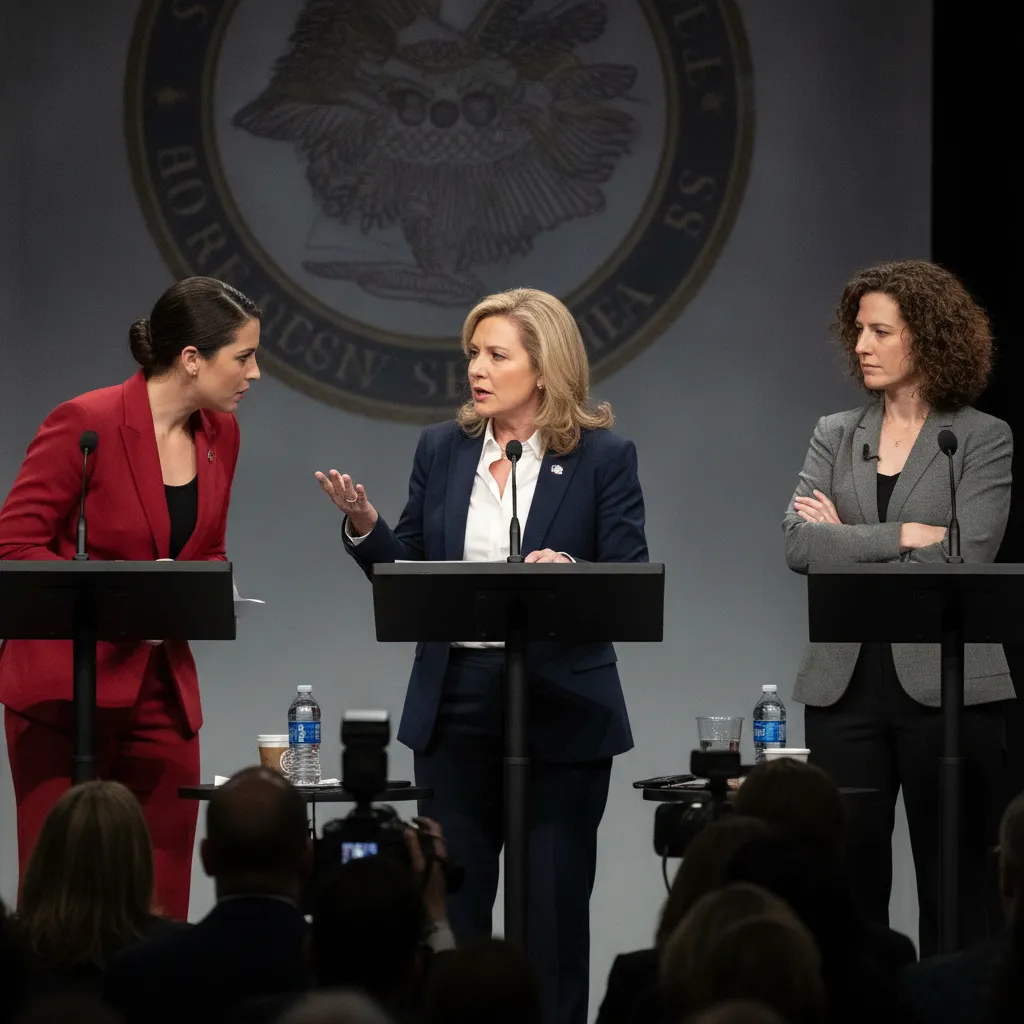
The battle for South Carolina’s Senate seat reached a fever pitch during Sunday night’s lone scheduled debate, revealing a race far tighter than many expected heading into the 2026 midterms. Appointed Republican Senator Darline Graham found herself locked in a contentious exchange with Democrat Annie Andrews and Libertarian Kasie Whitener, with the evening serving as a litmus test for Graham’s viability beyond her familial connection to the late Senator Lindsey Graham. While the atmosphere was frequently hostile, the encounter highlighted two candidates fighting desperately to define themselves before a skeptical electorate.
Annie Andrews leaned heavily into the narrative that Graham is an unqualified insider installed by Donald Trump rather than earned through merit. In one of the night’s sharpest moments, Andrews invoked a previous gaffe where Graham claimed national security was not her thing, comparing the admission to a surgeon admitting he struggles with appendectomies. This line of attack aimed to paint Graham as an amateur in a role requiring immense expertise. However, Graham appeared determined to avoid another public stumble, navigating basic policy questions with more poise than she had shown in prior appearances, even if some of her factual claims regarding Iranian nuclear capabilities remained questionable.
Graham countered by attempting to brand Andrews as an extreme leftist, though those attacks often felt scripted and desperate. From accusations of supporting government run healthcare to mentions of Jane Fonda’s PAC, Graham sought to alienate Andrews from moderate voters. Interestingly, Andrews worked hard to distance herself from the progressive wing of her party, explicitly endorsing the Second Amendment and criticizing Democratic failures at the border. She managed several nimble deflections, including a jab at Graham’s naming conventions that suggested the Republican candidate lacked authenticity.
Despite the heavy rhetoric surrounding cultural flashpoints like transgender rights—a cornerstone of the GOP strategy—those issues played a surprisingly minor role in the live exchange. Most attempts by Graham to bring up gender identity were rushed or cut off by the moderator, providing Andrews a reprieve from defending controversial past comments on school sports laws. As national Republicans pour millions into shoring up Graham’s standing in this deep red state, the intensity of their defensive posture suggests they view Andrews as a genuine threat rather than a mere formality.
Related Stories

Jeffries Eyes Suburban Swing Districts in Push for House Majority
House Minority Leader Hakeem Jeffries is ramping up his campaign efforts in critical swing regions, signaling a surge…
Blue Wave Ripples Through Ohio Heartlands as Early Ballots Shift
Early voting data from across Ohio suggests a surprising surge in Democratic enthusiasm, particularly in regions traditionally considered…

Federal Court Shuts Down Million Dollar Administration Media Blitz
A federal judge stepped in on Sunday evening to put a stop to a series of controversial, taxpayer-funded…
Ideological Clash Ignites South Carolina Senate Race
The political temperature in South Carolina reached a boiling point during a recent Senate debate characterized by sharp…